
 Originally called Light Peak, Thunderbolt is a new input/output system developed by Intel. Intel previously worked on USB and PCI Express, which are very common nowadays in data transfer technology. Apple invented FireWire and also helped popularize USB. They worked together closely to create something that is fast, easy, and flexible. It uses the mini-display port on computers, and if you want to connect pre-existing peripherals such as USB or FireWire, you just need to get an adapter.
 The speeds of the Thunderbolt technology are incredible. While transferring data, Thunderbolt is up to 20 times faster than with USB 2.0 and up to 12 times faster than with FireWire 800. It is even faster than USB 3.0. Intel even plans to go up to speed of 100Gbps as the technology matures. Intel has said that Thunderbolt is going to exist in parallel with and complement USB 3.0.
The Thunderbolt controllers can connect a PC with many other devices. Thunderbolt technology has 10Gbps dual channels, allowing you to use the full bandwidth in both directions. It allows even the thinnest, lightest laptops to connect to devices that give it extra power and performance. Thunderbolt technology is also very simple to use, just plug and play.
The technology was designed with professional audio and video in mind. It's very important to have low latency and accurate time synchronization. With Thunderbolt, video editing and sharing is faster and easier. Backing up data, sharing or editing it, all data transfer is accelerated and it reduces the time spent waiting.
Using Thunderbolt, designers can create new products that do not need to be limited by the computer. They can create expansion technology that will connect to desktops and workstations. They can introduce thinner and lighter laptops, which can use Thunderbolt to connect to extra devices. All in all, Thunderbolt creates many new possibilities.
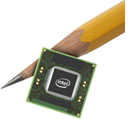 Thunderbolt products all need a controller chip, made by Intel, and a connector. These are included within devices that support the technology. The controller chip provides protocol switching capabilities, which is used for the dual channels in the cable. Currently, the iMac and the MacBook Pro include Thunderbolt. Intel is making its chip available to other companies, meaning in the future, Thunderbolt may become the new USB!
References
Sites
"Thunderbolt." Apple. Apple, 2011. Web. 2 Jun 2011. <http://www.apple.com/thunderbolt/>.
"Thunderbolt™ Technology." Intel. Intel, 2011. Web. 2 Jun 2011. <http://www.intel.com/technology/io/thunderbolt/index.htm>.
"An In Depth Look at Intel's Thunderbolt Technology ." HardwareCanucks. GTO Media Inc, 2011. Web. 3 Jun 2011. <http://www.hardwarecanucks.com/forum/hardware-canucks-reviews/41084-depth-look-intel-s-thunderbolt-technology.html>.
Images
Image of Thunderbolt logo taken from ™http://www.maclife.com/article/features/everything_you_need_know_about_thunderbolt>
Image of Thunderbolt cables taken from ™http://www.intel.com/technology/io/thunderbolt/index.htm>
Image of Intel chip taken from ™http://www.intel.com/technology/io/thunderbolt/index.htm>


a Rashad Haque production